China Top Solar Installation Companies Revolutionizing Renewable Energy?
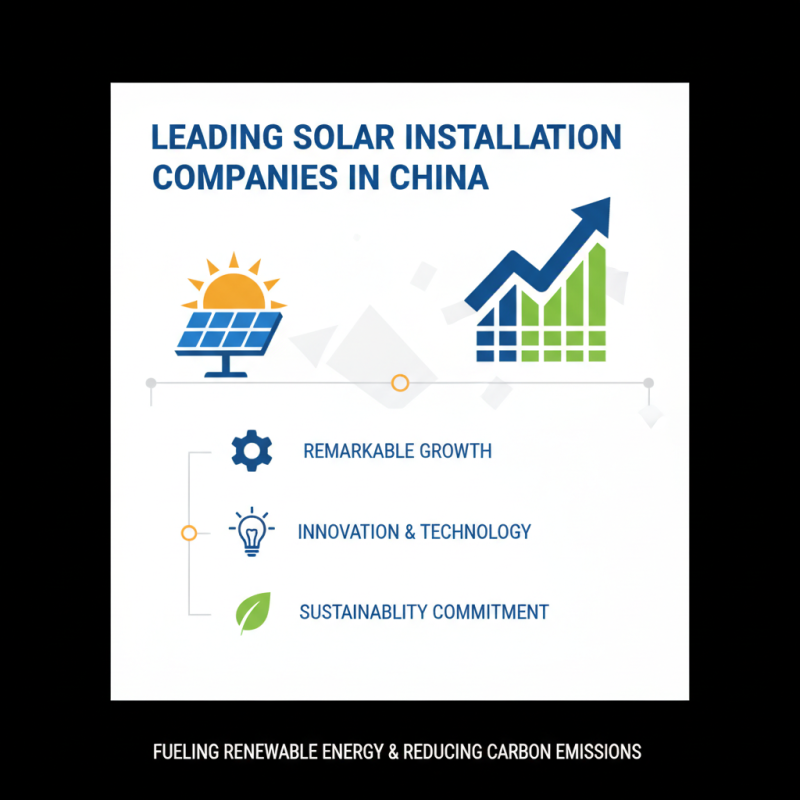
China has emerged as a leading force in the solar installation sector. The country boasts some of the top solar installation companies globally. These companies are not just focusing on production. They are paving the way for a greener future.
The rapid growth of solar installation in China reflects its commitment to renewable energy. Companies are innovating with advanced technology. They are also optimizing costs, making solar power more accessible. However, challenges remain. Quality control and workforce training are essential for ensuring reliability.
Many solar installation companies are pushing boundaries. They provide efficient solutions and increase capacity. Yet, critics suggest a need for greater transparency. The industry must continuously reflect on its practices to maintain consumer trust. The potential of solar energy is immense, but improvement is necessary.
Overview of China's Solar Industry Landscape
China's solar industry has seen unprecedented growth, dominating global installations. In 2022, China's share of the world’s total solar capacity reached over 50%, according to the International Energy Agency. This vast landscape comprises innovative companies pushing the envelope of renewable technology. The country’s advancements are evident in its shift from monocrystalline to bifacial solar panels, enhancing efficiency and output.
While these advancements are remarkable, there are challenges. Rapid growth has led to concerns about sustainability and the environmental impact of raw material extraction. Transparency in sourcing remains a critical issue, with supply chains often obscured. Monitoring these processes is essential for maintaining the integrity of the industry.
**Tip:** Focus on solar companies that prioritize transparency in their operations. Look for those that publicly disclose their supply chain practices to ensure ethical sourcing.
Additionally, industry reports indicate that competition among manufacturers is fierce. This pressure can sometimes lead to shortcuts in production quality. As a result, consumers must research solar products before making decisions. Investing in high-quality technology often pays off in long-term performance and reliability.
**Tip:** Compare the performance metrics of different solar products beyond price. Investing a bit more upfront can lead to greater efficiency and savings in the future.
China Top Solar Installation Companies Revolutionizing Renewable Energy? - Overview of China's Solar Industry Landscape
| Dimension |
Data Point 1 |
Data Point 2 |
Data Point 3 |
| Total Installed Capacity (GW) |
250 |
300 |
350 |
| Annual Production (Million Panels) |
100 |
120 |
150 |
| Employment Generated (Thousands) |
50 |
75 |
100 |
| Market Share (%) |
30 |
35 |
40 |
| R&D Investment (Million USD) |
200 |
250 |
300 |
Innovative Technologies in Solar Energy Solutions
In recent years, China's solar installation companies have made significant strides in renewable energy. Innovative technologies are reshaping solar energy solutions. According to the International Energy Agency (IEA), solar energy contributed to nearly 34% of the global renewable energy capacity in 2022. This growth is fueled by advancements in solar panel efficiency and storage systems.
New materials such as perovskite are improving the energy conversion rates of solar panels. These developments promise up to 30% efficiency, compared to traditional silicon panels, which range between 15% and 22%. Additionally, battery technology's rapid evolution allows for better energy storage. The global market for solar batteries is expected to reach $54 billion by 2030, creating greater flexibility in energy usage.
Tip: Consider integrating solar energy with smart home technology. This can optimize energy consumption and reduce costs.
Despite the progress, challenges remain. The recycling of solar panels poses environmental concerns. Currently, only a small percentage of solar panels are recycled at the end of their life cycle. As the industry grows, addressing these concerns is essential for sustainability.
Tip: Stay informed about the lifecycle of solar products. This knowledge can help guide purchasing decisions and encourage support for environmentally friendly solutions.
Impact of Chinese Solar Companies on Global Renewable Energy Market
Chinese solar installation companies are reshaping the global renewable energy market in profound ways. Data shows that in 2022, China accounted for over 70% of the world's solar module production. This dominance has led to significant price drops, making solar energy more accessible worldwide. The average cost of solar panels has decreased by nearly 90% since 2010, largely due to Chinese innovation and scaling in manufacturing practices.
Despite the rapid advancements, there are challenges to consider. Some experts worry about supply chain dependencies on a single region. The market's reliance on Chinese solar technology raises questions about long-term sustainability. Moreover, there are concerns regarding the environmental impact of production, particularly in terms of resource extraction and waste management. As these companies expand, the industry must address such critical issues.
The impact of Chinese solar firms extends beyond production. They are influencing global renewable energy policies. Many countries are now prioritizing solar energy in their strategic plans, often citing the competitive pricing as a major factor. In a 2023 report, 80% of polled energy leaders acknowledged that Chinese firms significantly affect their investment decisions in renewable energy. The balance between innovation, cost, and responsibility remains a complex equation for the future of global energy.
Future Trends and Challenges for Solar Installations in China
The solar installation sector in China is experiencing significant growth. As of 2023, nearly 60% of the world’s solar panels
are produced in China. This dominance comes with challenges that merit close examination. One of the key issues is the dependency on specific raw materials.
Polysilicon prices have fluctuated greatly, affecting profit margins. The recent surge in demand has also raised concerns about supply chain stability
and material availability.
Future trends indicate a shift towards smarter solar technologies. Integration with energy storage solutions is gaining traction, enhancing reliability.
A recent report noted that energy storage systems could grow at a compound annual growth rate (CAGR) of 29% by 2026. However, the advancement of these technologies requires
substantial investment in research and development.
Regulatory policies remain a double-edged sword. While they stimulate growth, they can also introduce complexities. The recent changes in tariffs and standards can create an unpredictable landscape.
Companies must stay agile to adapt to new regulations. Balancing innovation with compliance is crucial for long-term success. The path ahead is filled with opportunities and challenges.