Top Benefits of Commercial Solar Energy for Businesses Today?
In today’s business landscape, the importance of commercial solar energy cannot be overstated. As companies seek ways to reduce costs and improve sustainability, many are turning to solar solutions. According to Julia Wright, a renowned expert in the commercial solar industry, "Investing in solar energy is not just about savings; it's about future-proofing your business." This highlights the dual benefits of economic savings and environmental responsibility.
The shift toward commercial solar is gaining momentum. Businesses are now realizing that solar panels can significantly cut energy expenses. In fact, some companies report savings of up to 30% on their electricity bills after switching to solar. This financial advantage allows businesses to reinvest in other areas. However, transitioning to commercial solar does require a thoughtful approach.
Implementing solar energy systems presents certain challenges, too. Companies must navigate the complexities of installation and long-term maintenance. Additionally, the initial investment can seem daunting for some. But with the right guidance, these obstacles can be managed effectively. Embracing commercial solar not only enhances a company's reputation but also accounts for a tangible step toward sustainability.

Understanding Commercial Solar Energy
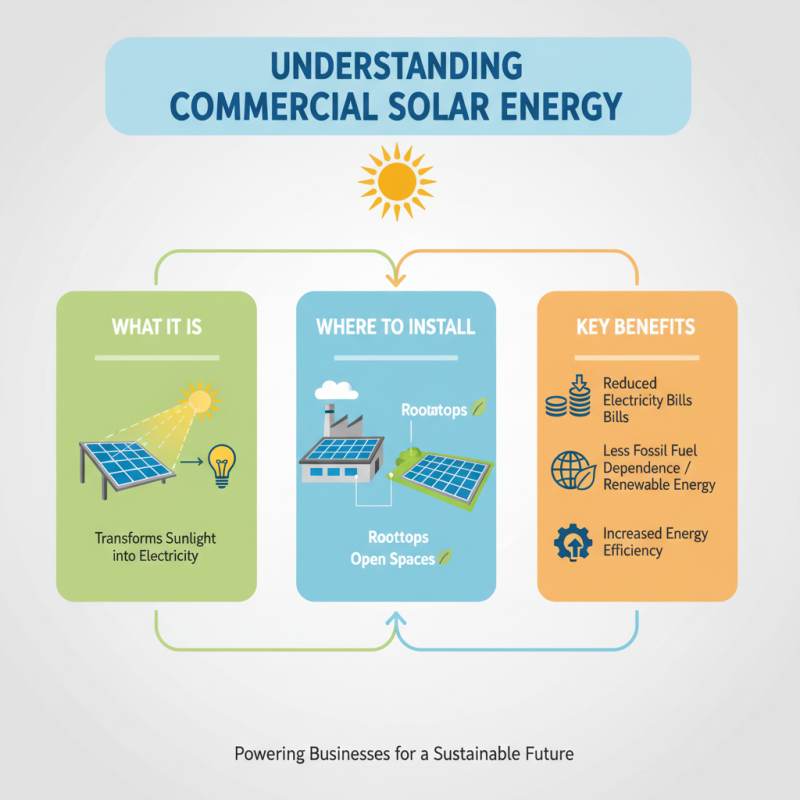
Understanding commercial solar energy is crucial for businesses today. This renewable energy source transforms sunlight into power, reducing dependence on fossil fuels. Solar panels can be installed on rooftops or open spaces, maximizing energy efficiency. By harnessing this abundant resource, companies can significantly lower their electricity bills.
Many businesses struggle with energy costs amidst rising prices. Solar energy offers a long-term solution, providing stable rates for years. The initial investment might seem daunting, but the return on investment often outweighs the costs. It's essential to assess your energy needs accurately. Poor planning can lead to underperformance, reducing potential savings.
Solar energy systems require maintenance, which can be a drawback. Companies must be prepared for occasional repairs. Additionally, not every location is suitable for solar installations. Shade, weather, and regulations all play a role. Understanding these factors can help businesses make informed decisions, enhancing their sustainability efforts.
Cost Savings and Financial Incentives
Businesses today are recognizing the cost-saving potential of commercial solar energy. Installing solar panels can significantly reduce electricity bills. Many organizations experience savings of 30-60% on their energy costs. This helps improve overall profitability and cash flow. Additionally, government incentives make switching to solar more attractive. Tax credits and rebates can offset initial installation costs, making the investment more viable.
Tips: Conduct a detailed analysis of your energy needs. This will help you understand how much solar energy you require. Consult with a financial advisor to explore available incentives in your area.
However, not all installations are equal. Some businesses may face challenges in upfront costs or lengthy return-on-investment periods. It's essential to research credible solar providers. Evaluate their experience and customer reviews. This ensures choosing a reliable partner for your solar transition.
Tips: Seek multiple quotes from different vendors. Compare services, warranties, and financing options. This will help you make an informed decision.
Environmental Benefits of Solar Energy Adoption
The environmental benefits of solar energy adoption for businesses are significant. Solar energy reduces greenhouse gas emissions, an essential step toward fighting climate change. By switching to solar, businesses can lower their carbon footprints. This transition helps mitigate global warming, which poses threats to ecosystems and human health.
Another key benefit is the conservation of water. Traditional energy sources often require vast amounts of water for cooling and processing. In contrast, solar power systems use minimal water during operation. This water conservation is crucial, especially in drought-prone areas. Companies adopting solar can contribute to local water sustainability efforts.
However, businesses must consider their energy needs and installation costs. Not all locations are ideal for solar, and initial investments can be high. Evaluating these factors is vital. While solar energy presents numerous environmental advantages, careful planning is necessary to maximize its impact and ensure practical implementation.
Enhancing Business Reputation with Sustainability
In today's competitive market, sustainability enhances business reputation significantly. A recent report from the International Energy Agency highlights that companies adopting solar energy can reduce their carbon footprint by up to 80%. This reduction in greenhouse gases not only meets customer expectations but also attracts eco-conscious consumers. Many businesses are enhancing their image through green initiatives.
Embracing commercial solar energy can lead to a more positive public perception. According to a survey by Nielsen, 66% of consumers prefer brands committed to environmental sustainability. This statistic emphasizes the growing need for businesses to align with eco-friendly practices. However, many organizations struggle to integrate solar solutions effectively. They face challenges such as upfront costs and installation complexities.
Failure to adapt may harm a company's reputation. Businesses losing market share due to a lack of sustainability efforts need to reflect on their strategies. Engaging with renewable energy sources can be a powerful differentiator. Yet, companies must be mindful of the resources required to implement these changes. Balancing financial viability with environmental goals is essential for long-term success.
Top Benefits of Commercial Solar Energy for Businesses
Long-term Energy Independence and Stability
Businesses today face fluctuating energy prices often tied to global markets. Transitioning to commercial solar energy offers an opportunity for long-term energy independence. By generating your own electricity, you are less reliant on traditional utility providers. This independence can significantly stabilize operational costs over time.
One effective tip is to assess your energy consumption patterns. Understanding when and how much energy your business uses can guide you in maximizing solar energy production. Invest time in monitoring these patterns. Also, consider the potential for battery storage systems to enhance energy efficiency. They can store excess energy generated during peak production times for later use.
Investing in commercial solar panels can lead to substantial cost savings. However, installation costs can be a barrier. Seek out financial incentives and tax credits available in your area. It requires reflection on your company’s financial health and energy goals. Often, careful analysis reveals that the long-term benefits outweigh initial costs.
Top Benefits of Commercial Solar Energy for Businesses Today
| Benefit |
Description |
Expected Impact |
| Long-term Energy Independence |
Solar energy reduces reliance on grid electricity, providing stability. |
Decreased exposure to energy price fluctuations. |
| Cost Savings |
Lower electricity bills and potential tax incentives. |
Thousands of dollars saved annually. |
| Environmental Responsibility |
Reduces carbon footprint and promotes sustainability. |
Improved public image and customer loyalty. |
| Increased Property Value |
Solar installations can enhance property value. |
Higher resale value for commercial properties. |
| Energy Resilience |
Solar systems provide backup energy during outages. |
Minimized business interruption risks. |